Climbing Mount Kilimanjaro was one of the hardest things we’ve ever done, but we also learned a lot about what helps lead towards a successful summit.
If you’re planning a trek and want a straightforward summit-day guide, this is the version we wish we had before we started.
1. Give yourself enough time on the mountain
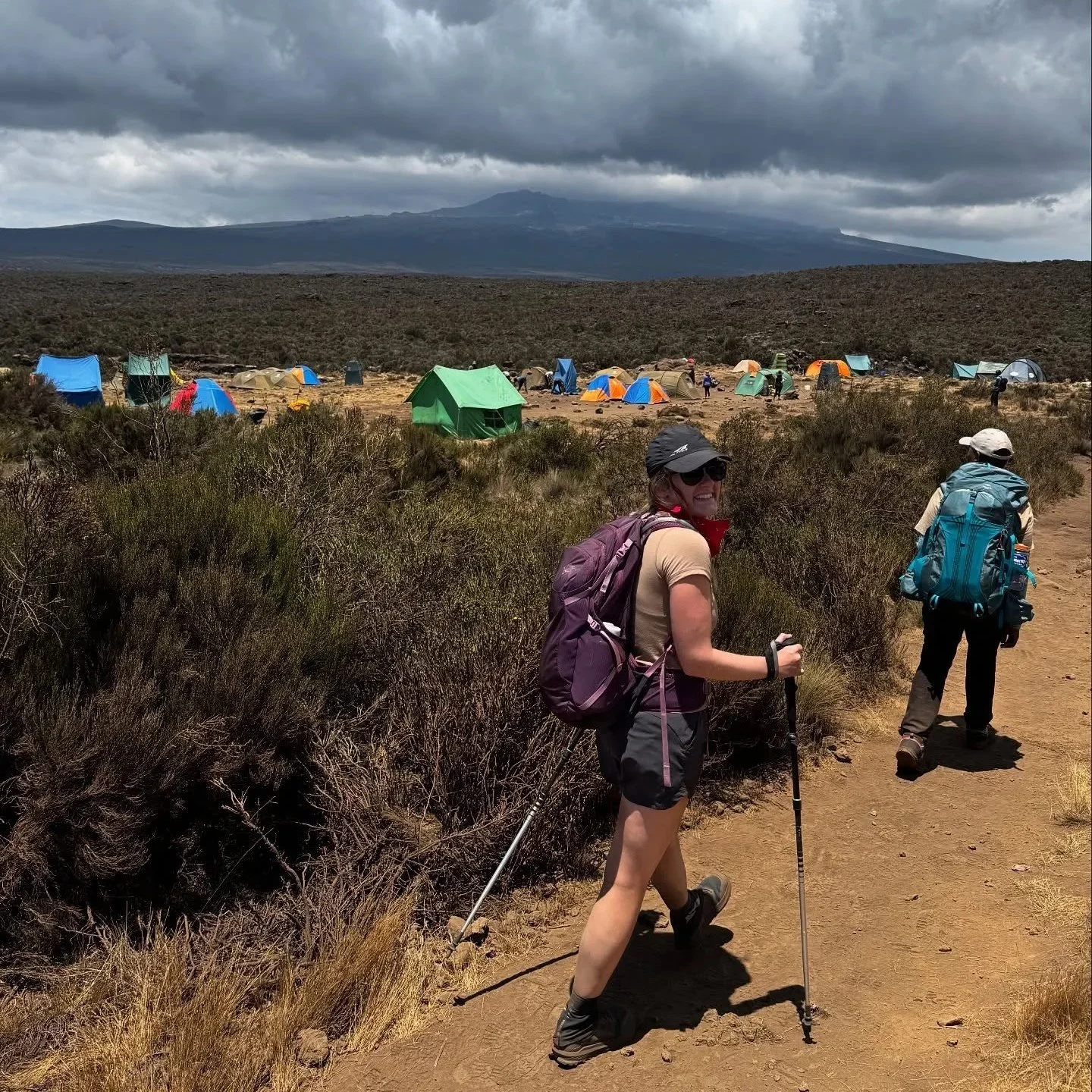
Getting to camp on day 2 and still feeling stellar
The first thing that helped us was choosing a longer itinerary. We did the 8-day Lemosho route, and that extra time helped a ton. A slower ascent gives your body a better chance to acclimate, which is what you want at high altitude.
If you’re trying to decide between routes, we recommend thinking about summiting success first and convenience second. A shorter route may sound appealing, but for us, the slower build-up was the smarter choice. It gave us more room to adjust, rest, and keep moving without pushing too hard too early.
2. Pole, pole really does work
Pole, pole (poh-lay poh-lay) means slowly, slowly, and we heard it constantly on the mountain. It sounds almost too simple, but it’s the perfect mindset. Going slowly kept our heart rate steadier and made the altitude feel more manageable.
This was important on steeper sections and anytime we caught ourselves trying to speed up. We learned quickly that Kilimanjaro is not a race. The goal is to stay controlled enough that you can keep going hour after hour. We found it helpful to shorten our steps and accept that slow was the best strategy for summiting!
3. Practice breathing before you need it
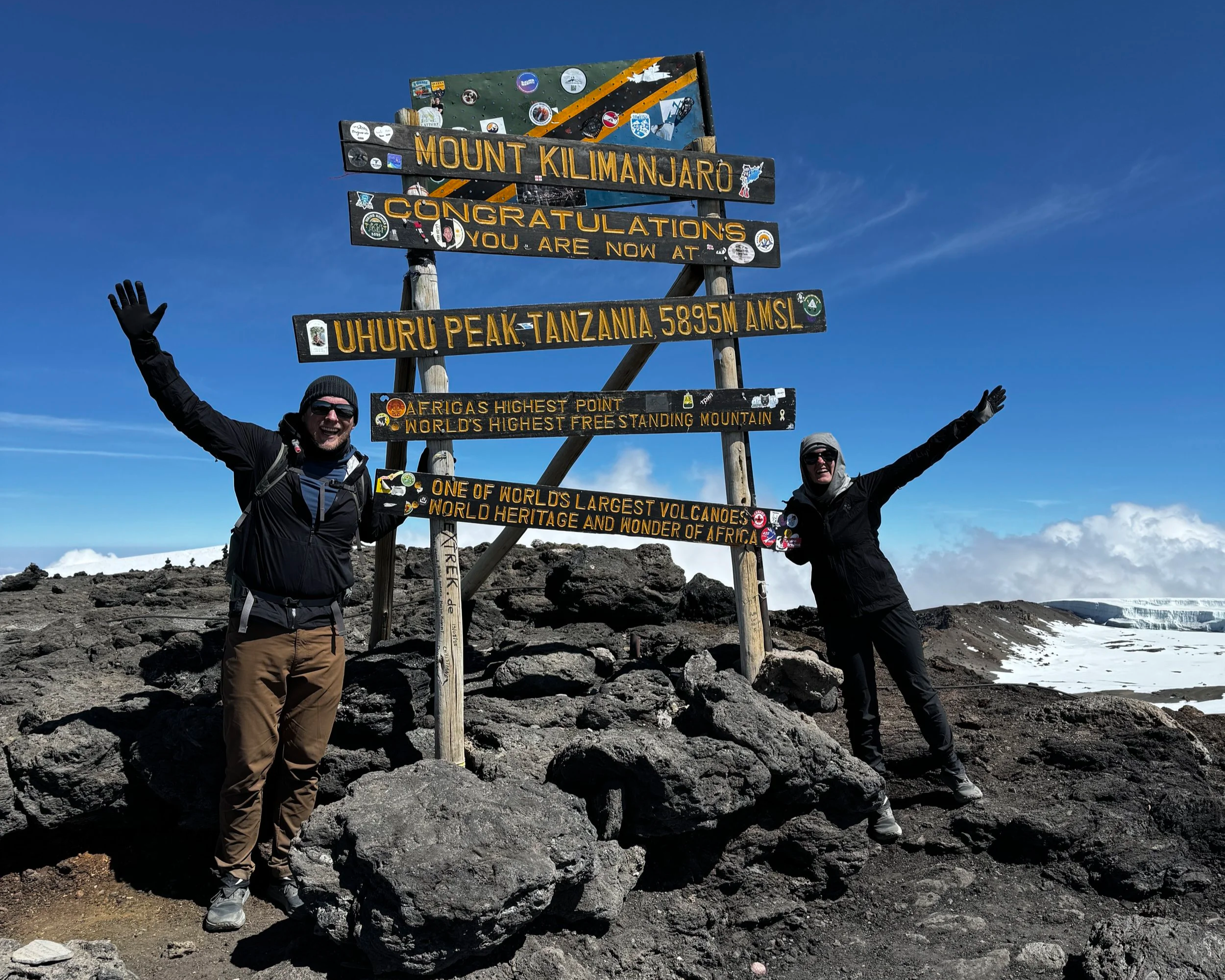
Summiting Mt. Kili
Breathing was one of the most useful tools we had. We focused on inhaling through the nose and exhaling through the mouth. A strategy we tried was box breathing, which looked like:
Inhale deeply through your nose for a count of 4
Hold your breath for a count of 4
Exhale through your mouth for a count of 4
Hold for a final count of 4
We practiced it not just near the summit but also before bed for about 5 minutes. That routine helped us stay calmer, and it gave us something concrete to focus on when things felt hard.
On summit day, breathing became even more important. When the air felt thin and every step took effort, we kept coming back to that simple rhythm. It was a small thing, but it made a huge difference. If you’re training before your trip, it’s worth practicing this pattern ahead of time!
4. Altitude medicine can make a huge difference
We took Diamox to help prevent altitude sickness, and for both of us it was a game changer. We started it during our first few days to help with acclimation. That said, everyone is different, so always check with your doctor first.
5. Research your gear early
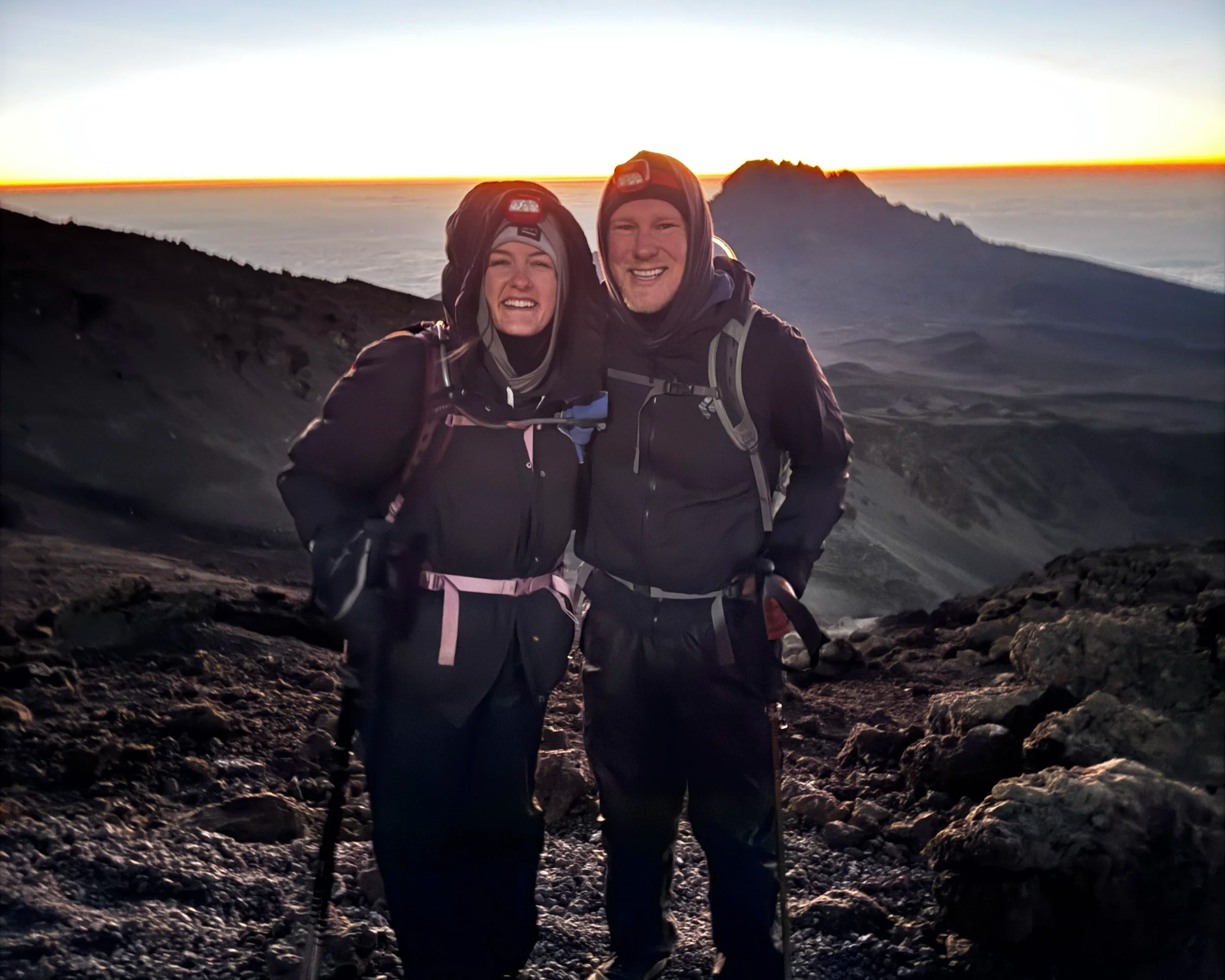
Our gear keeping us warm as as we summit
We spent a lot of time figuring out what layers to bring and what to rent. The day before the climb, our guide came to our room to do a gear check and make sure we had everything we needed.
A few gear lessons stood out for us:
Bring layers you can add and remove easily
Don’t overpack. You can rewear a lot!
Decide ahead of time what is worth renting versus bringing yourself. We were doing a lot of travel before this trip, so we ended up renting quite a bit, like hiking poles, a heavy coat, and wind pants
Test your system before you go, especially if you are not used to high-altitude weather
Bring a duffel bag you’re not afraid to get dirty. We didn’t realize the duffel bag we brought was going up the mountain with us. We didn’t mind it getting dirty, but something to keep in mind
Climbing Mount Kilimanjaro was challenging yet extremely rewarding. We can’t wait to go back to more big mountain adventures like this one!
